
Located in Itabashi Ward, Tokyo, lie the ruins of the Army Itabashi Gunpowder Manufacturing Plant.
These silent remnants offer a tangible connection to the city’s transformation from the Meiji era to the present day.
In Japan, certain historical facilities are opened to the public only once a year.
This specific site was opened for a single day on October 4, 2025.
I visited during this special public opening to walk through the grounds and explore its history.

The Army Itabashi Gunpowder Manufacturing Plant Ruins
Located in the Kaga district of Itabashi, this area served as a military factory for the Japanese Army from the Meiji period (late 19th century) through World War II.
In 1940, the facility was renamed the Tokyo Second Army Arsenal, Itabashi Manufacturing Plant.
It served as a core center for military production, vital for the manufacturing, testing, and research of gunpowder and explosives.
However, the history of this site dates back much further—to the Edo period.
A Site Spanning from the Late Edo Period to WWII
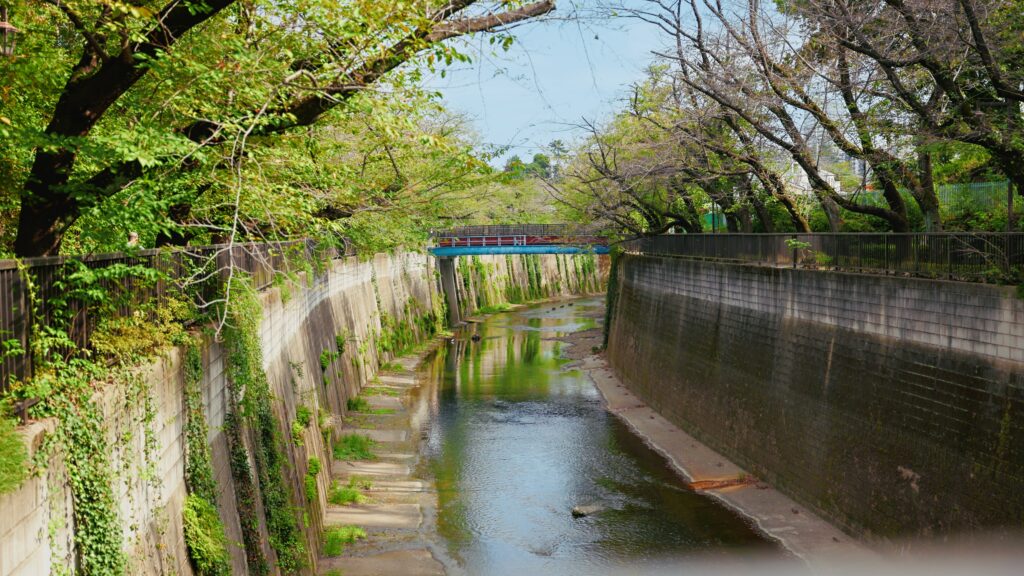
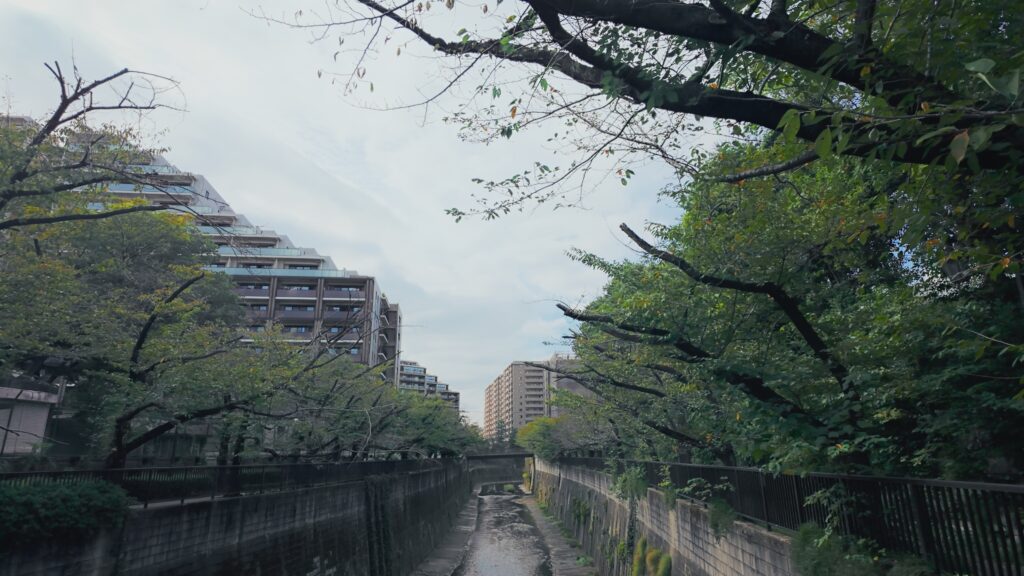
The site’s origins can be traced to 1679, when the Kaga Maeda clan (a powerful feudal lord family) received the land for a “Shimoyashiki” (a lower residence or villa). This villa featured an artificial hill known as a Tsukiyama and was bordered by the Shakujii River.
This specific topography likely made it an ideal location for the secretive and dangerous work of weapons research.
Notably, Western-style cannons were already being manufactured here by the end of the Edo period. In 1853, the year Commodore Perry arrived in Japan, the Kaga domain used waterwheels powered by the Shakujii River to drive machinery for casting Western-style cannons.
After the Meiji Restoration, the Ministry of War (later the Army) designated this area as a crucial site for gunpowder production in 1871. By 1876, the facility was officially established. The Army utilized approximately 30,000 tsubo (about 99,000 square meters) of the vast former feudal estate to build research facilities.
Production of black powder began, and firing tests started in 1877.
The artificial hill from the old feudal villa was utilized as a target buttress for these ballistics tests.
The Ballistic Tube (Dandokan)
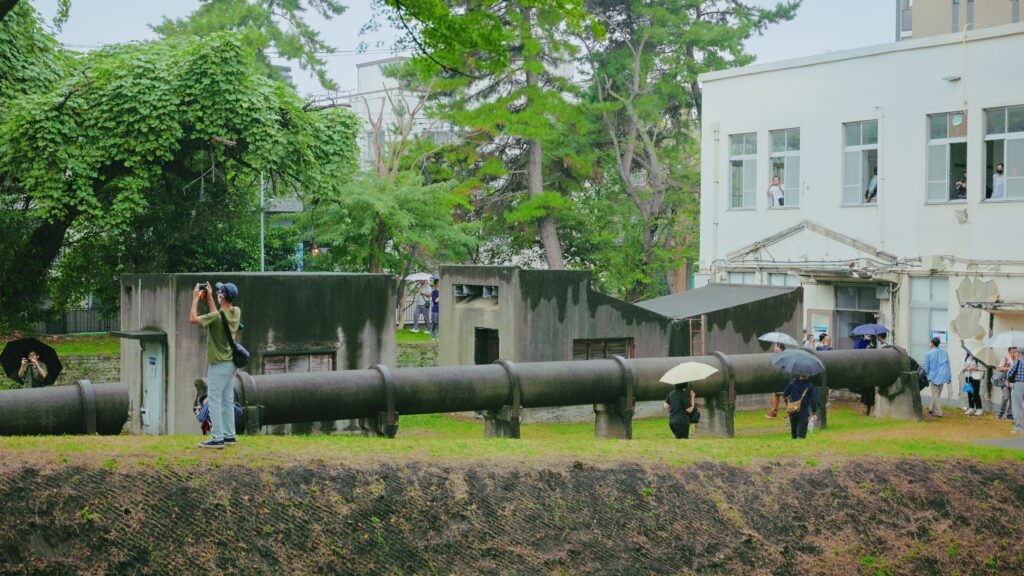
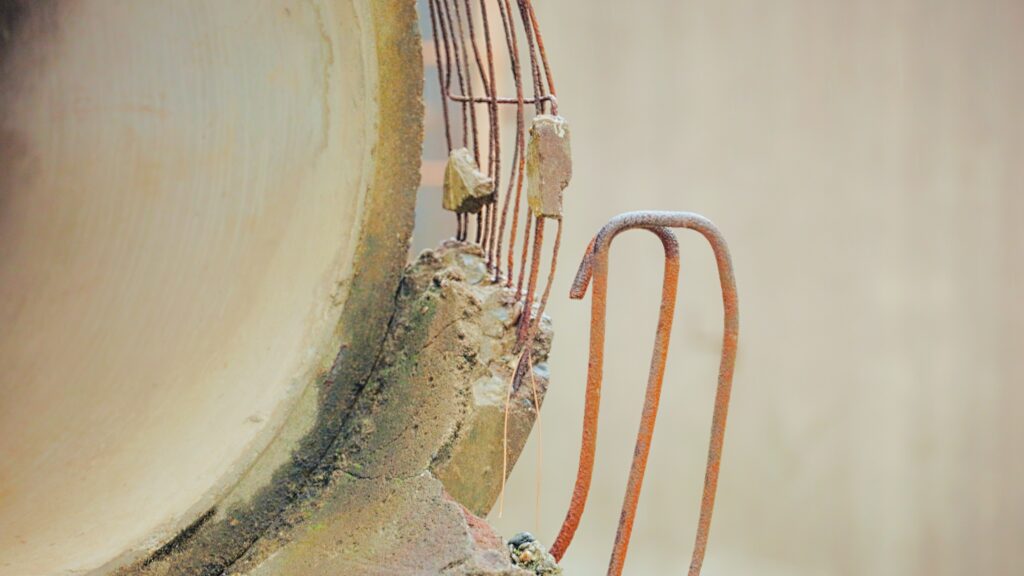
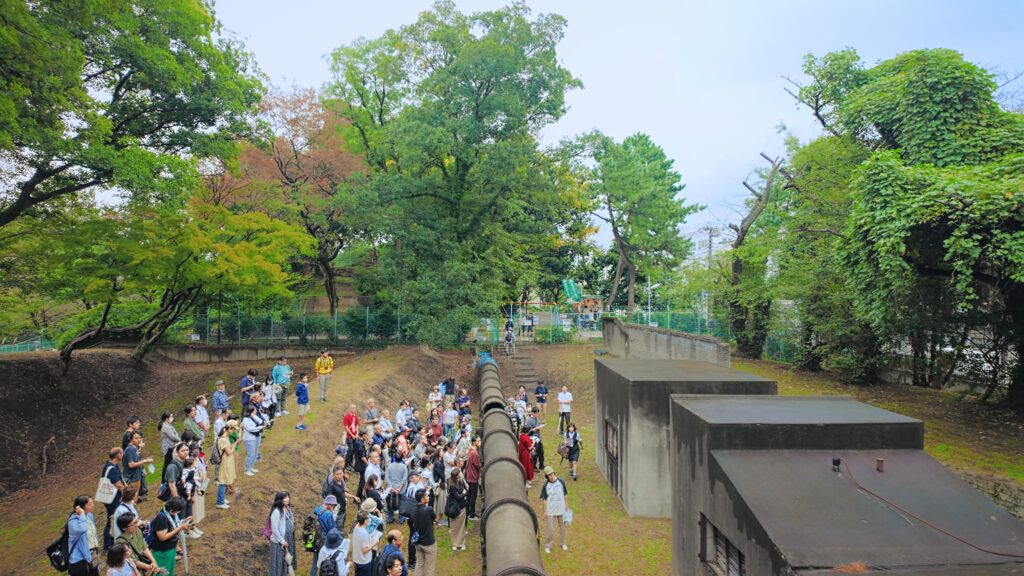
The most striking structure in the facility is a massive tube sitting in the center of the grounds.
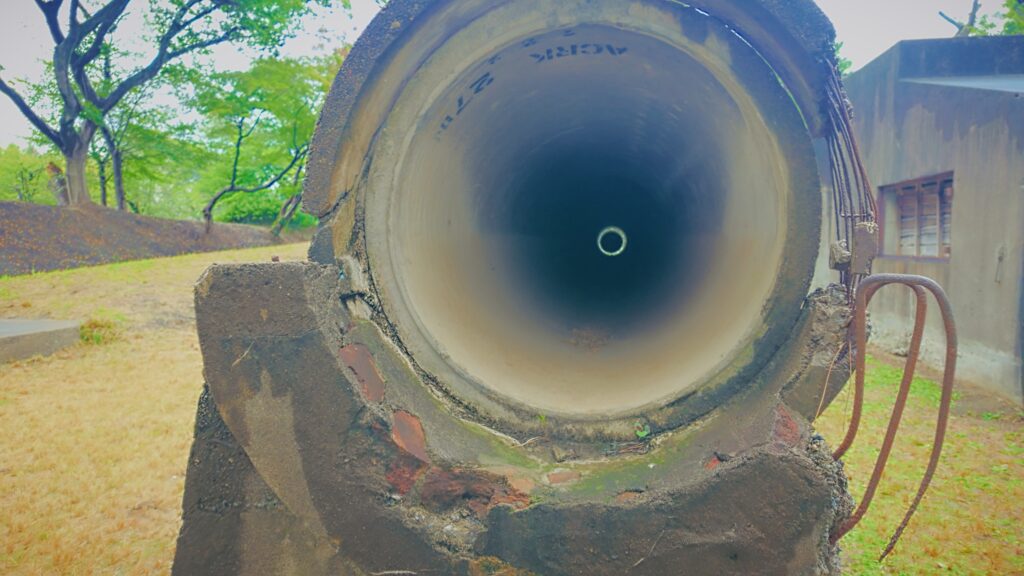
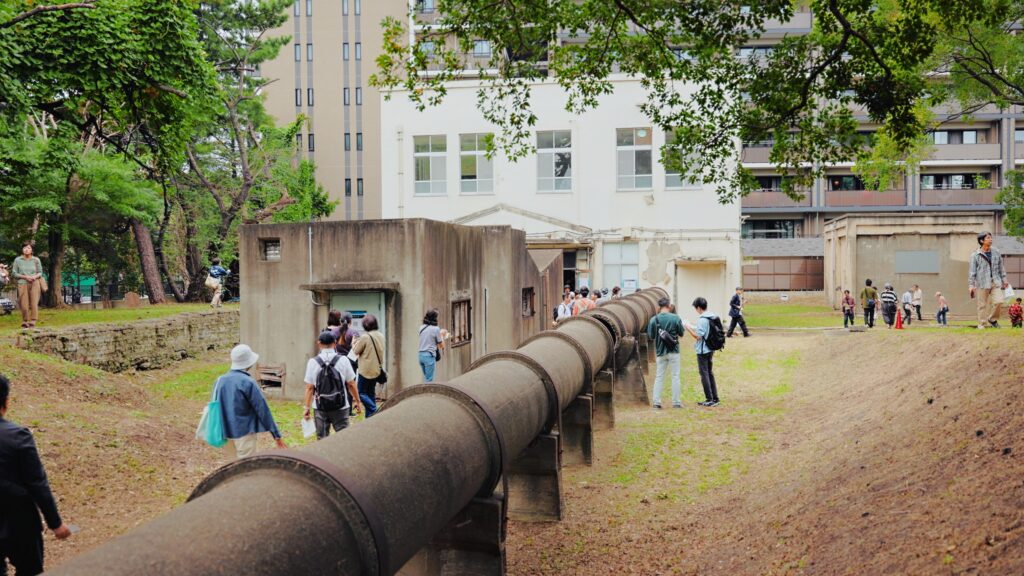
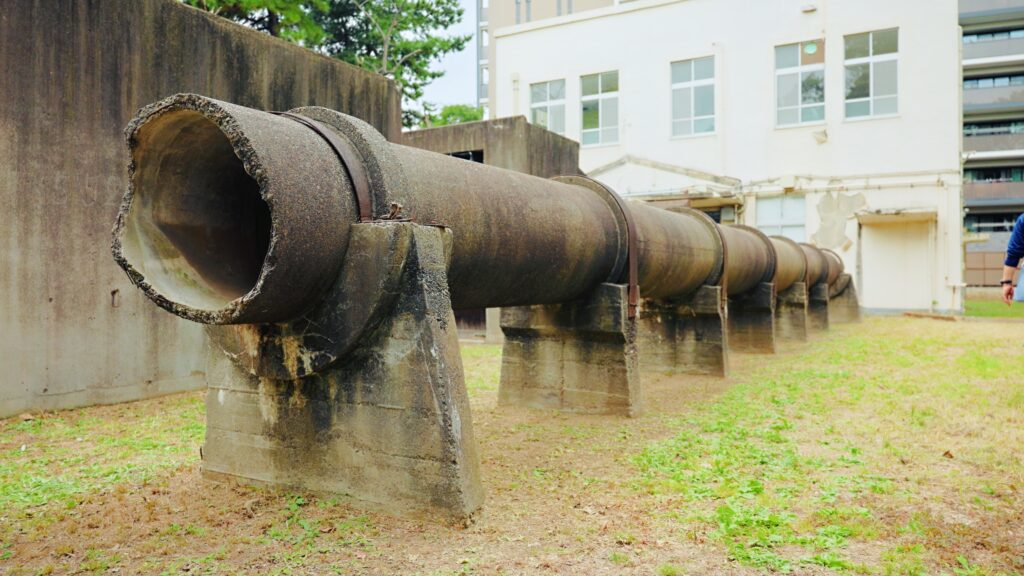
Known as the Ballistic Tube, this 50-meter-long structure was built by the Imperial Japanese Army to test firearm gunpowder.
It allowed for “concealed firing tests,” preventing weather conditions (like wind or rain) from affecting the trajectory, thus ensuring accurate data collection.
- Construction: While the exact date is under investigation, records suggest it was built between 1921 and 1934.
- Structure: Although currently severed from the main building, it originally connected directly to the Combustion Laboratory (the white building in the back), allowing tests to be conducted entirely indoors.
The tube leads toward the Tsukiyama (now part of Kaga Park), which served as the backstop/wall for the bullets. While the specific testing methods remain partially a mystery, remnants of ceramic insulators on the support pillars suggest that electromagnetic fields may have been used to measure the velocity or condition of the gunpowder inside the tube.
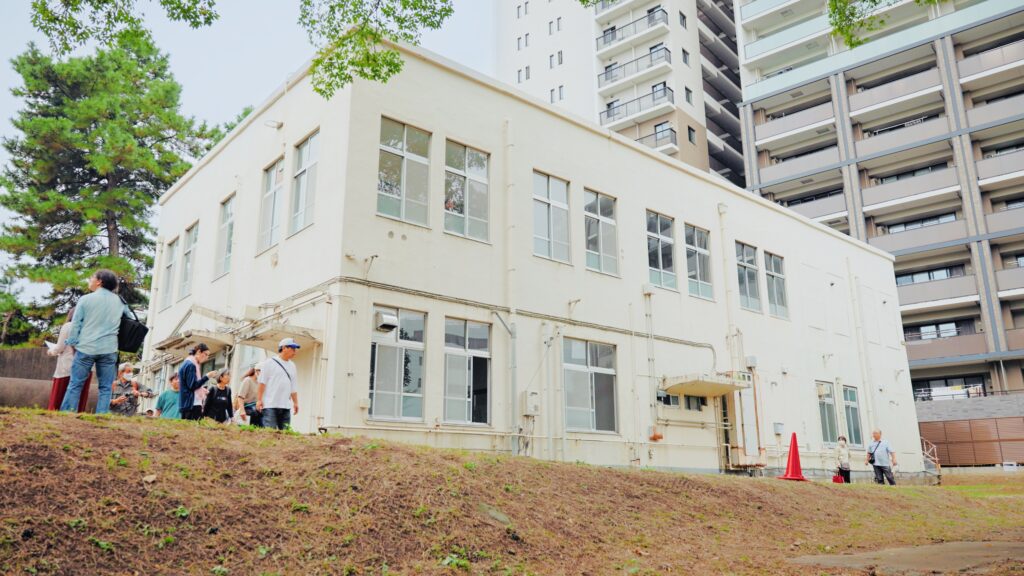
The Combustion Laboratory
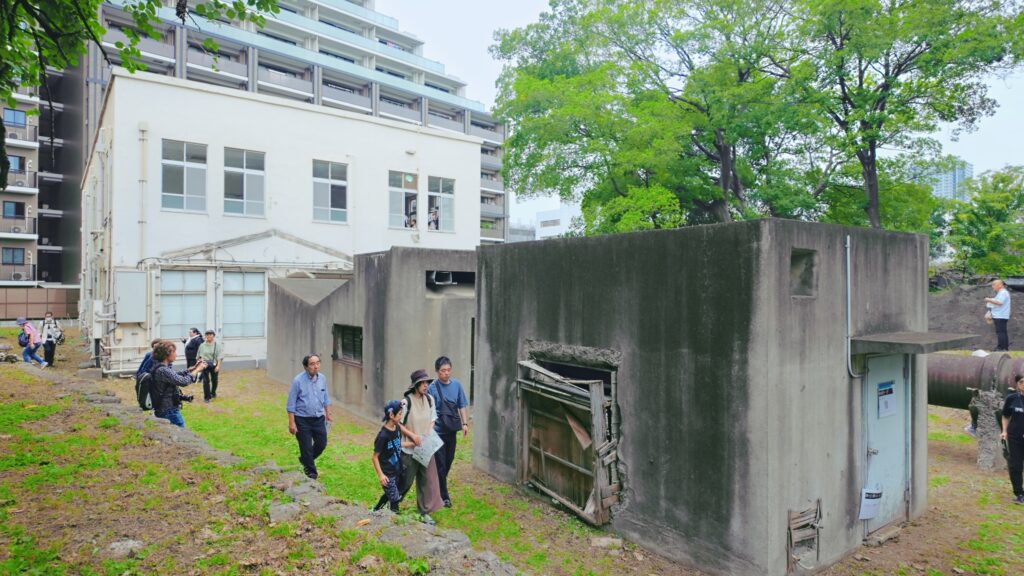
This is the largest and most substantial remaining structure, and we were allowed to walk inside.
Unlike the surrounding buildings, this lab was built with robust reinforced concrete. Seismic surveys have shown that it is still so structurally sound that it requires no reinforcement today.
Built between 1943 and 1945, this building served as the firing room connected to the Ballistic Tube.
Traces of this connection can still be seen from the interior.
Post-War Era: Repurposing and the Noguchi Institute
After WWII ended, the facility’s role changed dramatically.
As an Army factory, it was closed and placed under GHQ (Allied occupation) administration.
Eventually, private organizations were allowed to lease the facilities.
At the time, Tokyo suffered from a severe shortage of buildings due to air raids. Consequently, many groups, including the Noguchi Institute, Shiseido, and various schools, moved into the old gunpowder plant to restart their post-war activities.
- Legacy: You can still see traces of this today; a Shiseido beauty school is located nearby, a direct result of this post-war history.
- Evolution: The Noguchi Institute used the site until the 2010s, renovating and expanding the old buildings to suit modern needs. This evolution—changing function while retaining form—is a characteristic feature of industrial heritage sites.
While some of the land has been sold and developed into condominiums, the ruins described here were preserved as a historic site due to the efforts of Itabashi Ward and developers who recognized their cultural value.

The Test Room
This building is known to be related to gunpowder experiments, though its specific function remains unclear.
- It features a distinctive slanted roof.
- The reinforced concrete gives a heavy, strong impression.
- Based on the layout, it is speculated that this room may have housed power generation equipment or measurement instruments for the Ballistic Tube.
Being able to walk inside the fenced area and touch these structures offers a rare, tactile connection to history.
The fact that mysteries still remain about their exact use adds to the allure.
The Retaining Wall & Light Railway
Gunpowder testing carries a constant risk of explosion.
Therefore, facilities were designed to be independent and spaced apart.
This required a lot of land and a solution for transporting materials between buildings.
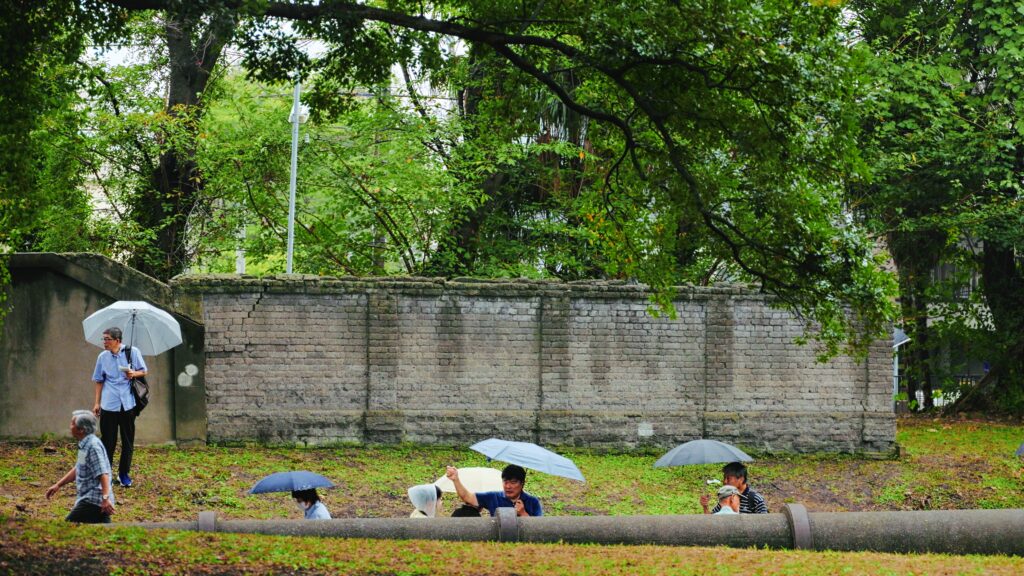
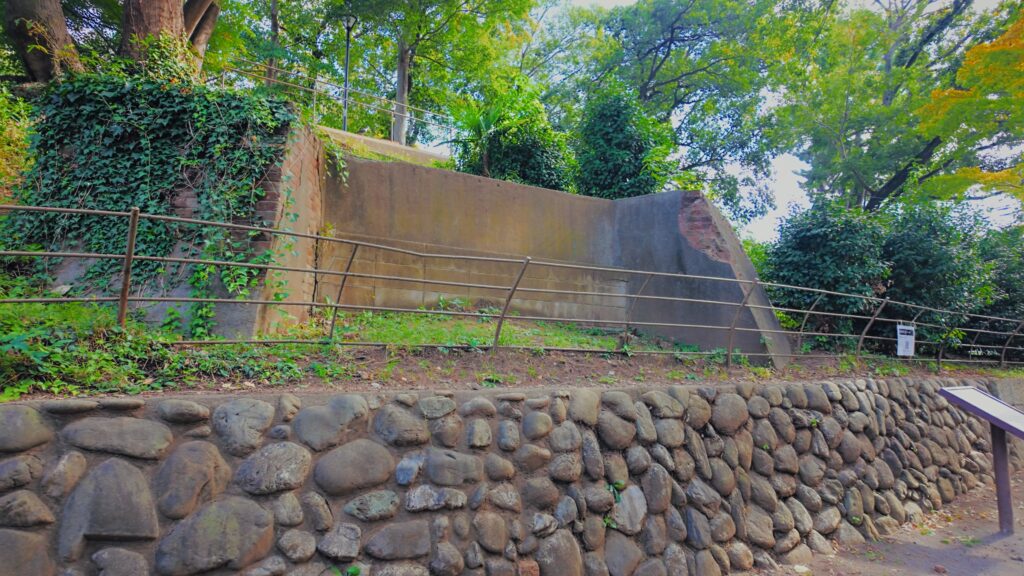
The solution was a railway. The large retaining wall seen on site separated the buildings from the tracks.
This was a Light Railway (narrow gauge, 750mm), similar to a trolley line.
It transported heavy materials across the large facility.
The wall stands as a remnant of this transport network.
Warming Storage Room (Kaon Chozoshitsu)
This was not for bulk storage, but rather a research facility to study the preservation and degradation of gunpowder.
Chemical Context: Dynamite (nitroglycerin-based) is unstable; it can explode at low temps and melt at high temps. TNT is also sensitive to high heat.
This room was likely used to verify safety limits and storage methods for these volatile substances.
Function: Gunpowder degrades when heated.
This room likely used floor heating (evidence of hot water pipes exists) to artificially raise the temperature and test how the explosives held up.
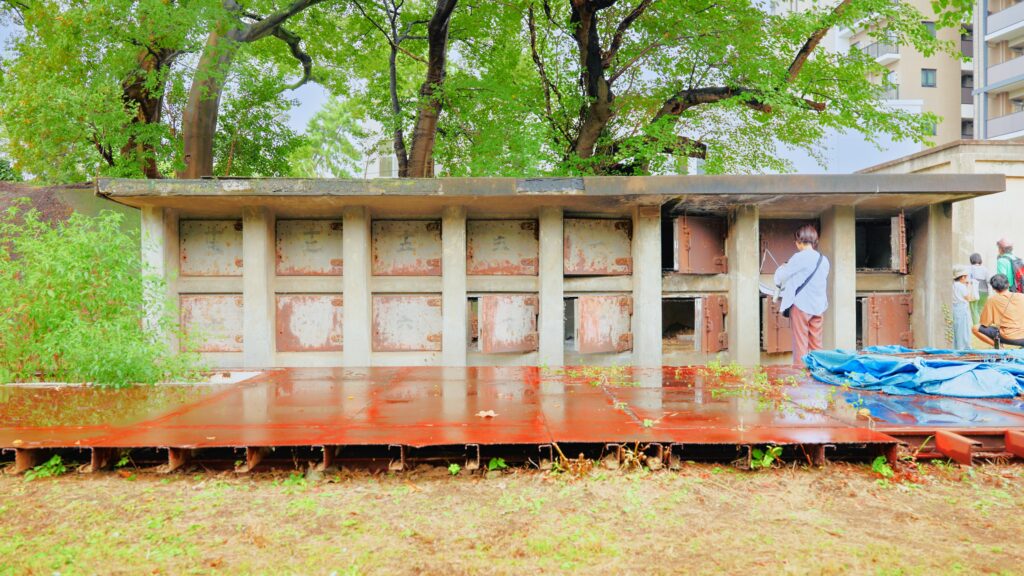
Ambient Storage Room (Joon Chozoshitsu)
In contrast to the warming room, this was a warehouse for storage at normal temperatures.
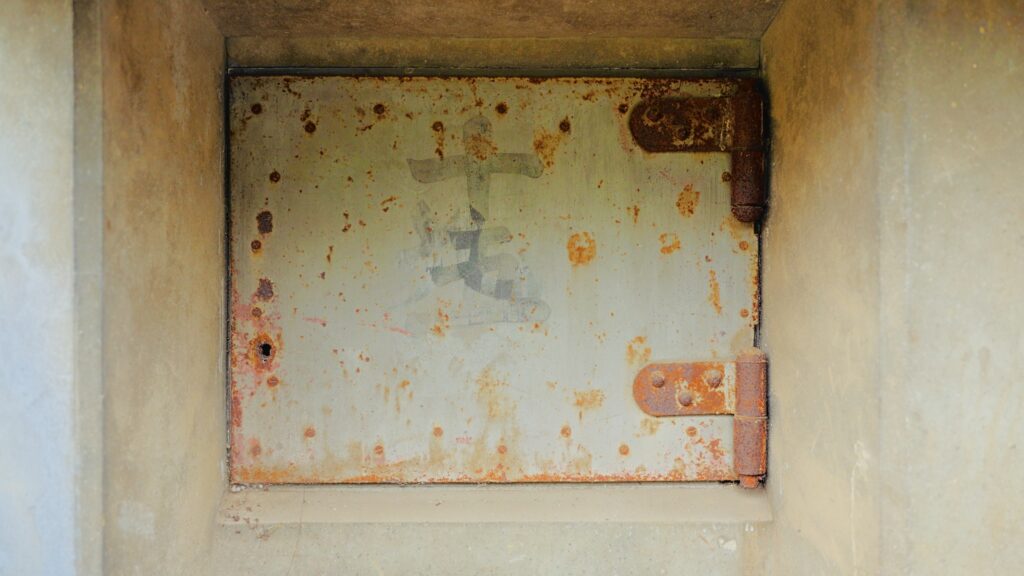
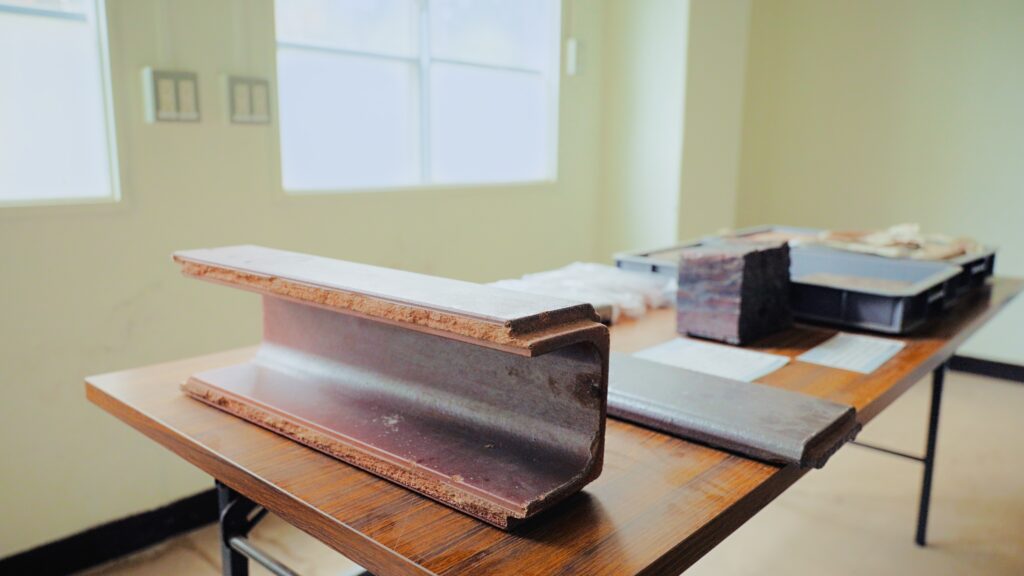
Doors: Heavy iron doors, over 10cm thick, feature Kanji numerals for numbering, suggesting a strict management system for sample storage.
Design: It is compartmentalized, unlike a standard warehouse.
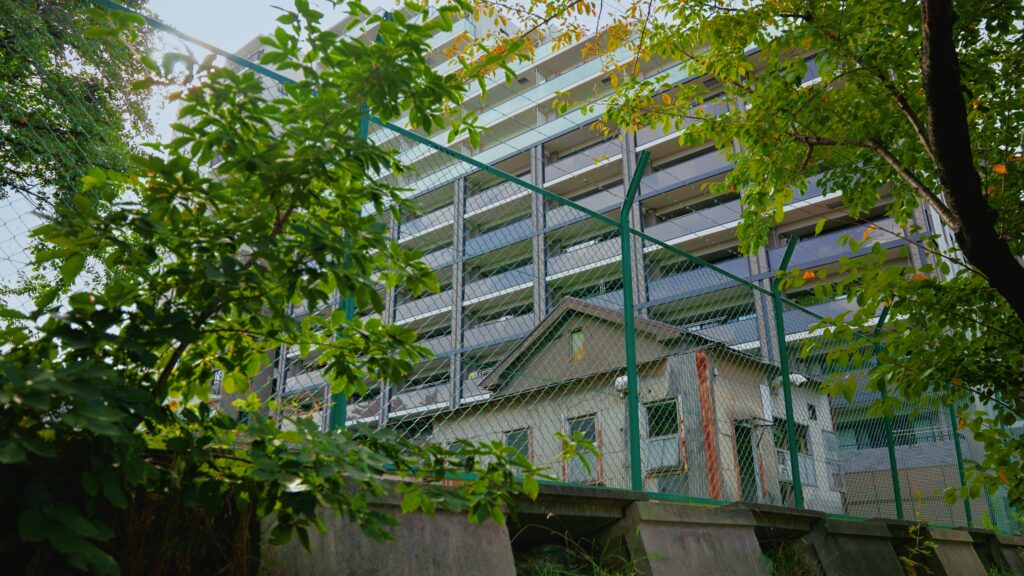
Explosives Manufacturing Lab
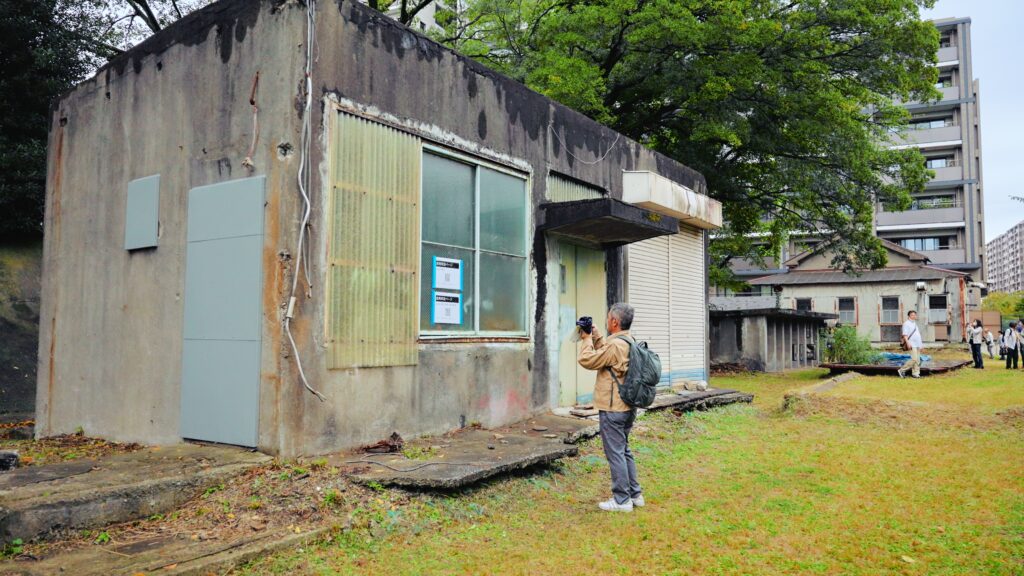
As the name implies, this was for manufacturing explosives, but strictly for R&D purposes, not mass production.
Note: This specific structure was relocated from the land of a neighboring condominium to preserve it.
Architecture: The walls appear thin. This is likely a “Blow-out” or blast-relief construction.
The roof was designed to be weak so that in the event of an accidental explosion, the blast would escape upward toward the sky rather than outward, protecting the surroundings.




The Experience: Walking the Grounds
Walking through the Combustion Laboratory was a highlight.
Despite the poor weather, many visitors attended, showing a renewed interest in these ruins.
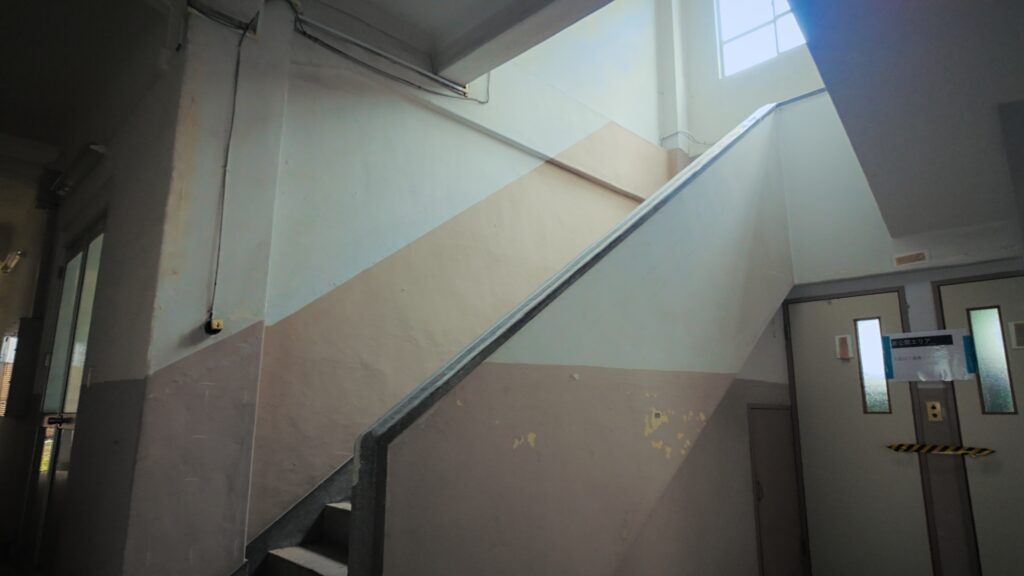
Inside, a staircase leads to the second floor.
Passing through a dimly lit corridor (no electricity runs here), you find the stairs. Light streams in through the windows, illuminating polished stone handrails.
The sound of footsteps echoes, creating a quiet, contemplative atmosphere rarely found in the bustling metropolis of Tokyo.
Kaga Park: Ruins You Can See Anytime
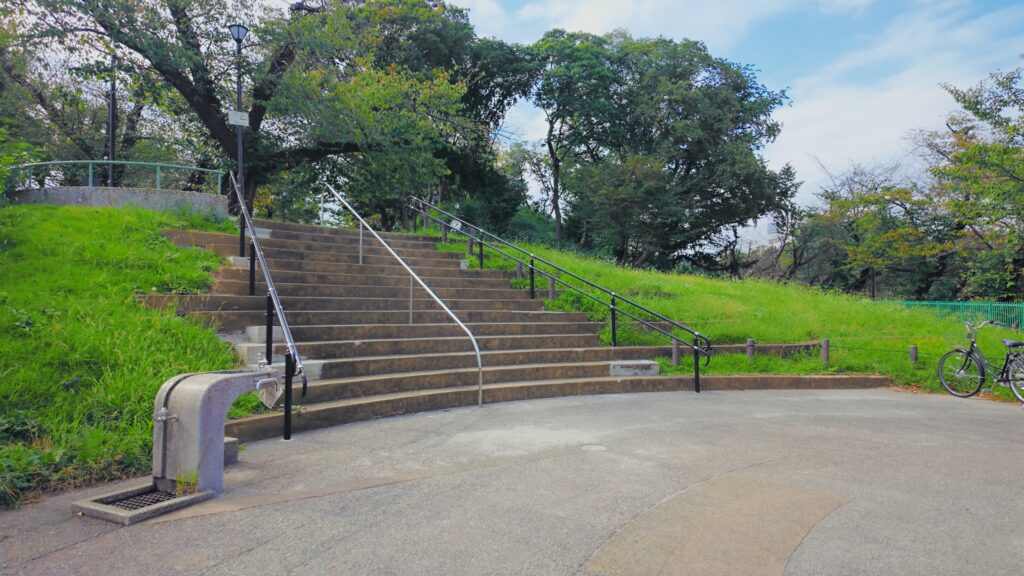
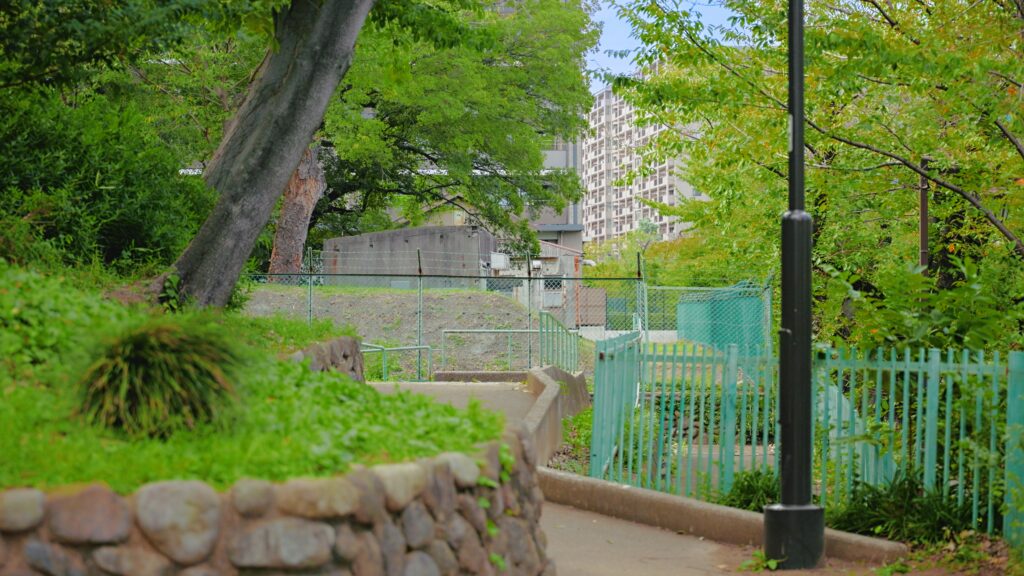
While the main factory ruins are fenced off, the adjacent Kaga Park is open to the public year-round and contains significant remnants.
The Atmosphere: Even without knowing the history, the park is unique. It features rugged, industrial structures that look out of place in a regular playground—giving it a fascinating, slightly eerie vibe.
The Target Buttress (Shada): In the park, you can see the brick structure that served as the target for ballistics tests. The center was plugged with concrete blocks after the war. This target likely predates the Ballistic Tube.
Hiking the “Tsukiyama”
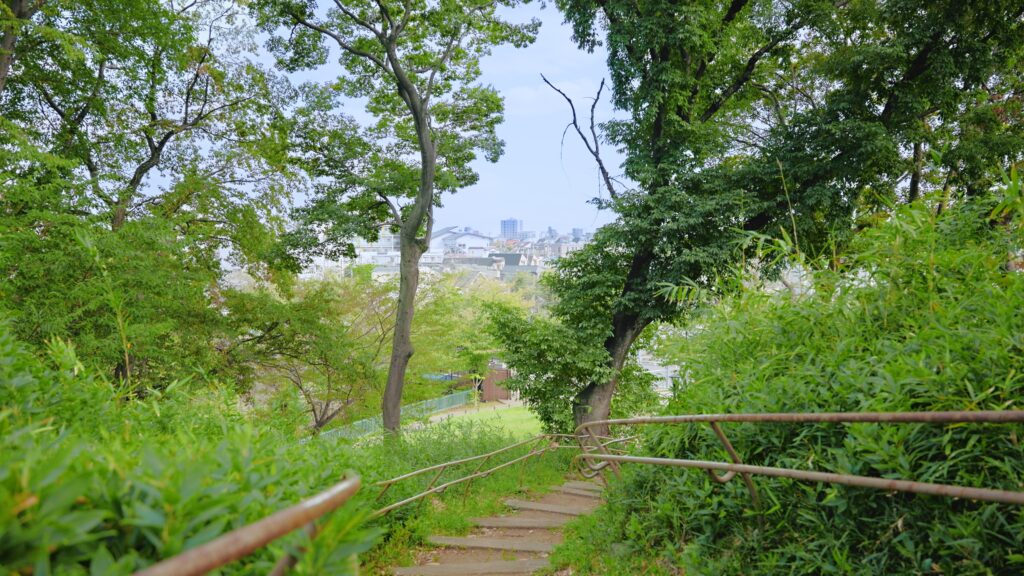
The park features the small artificial hill (Tsukiyama) from the original Edo-period estate. It takes only about a minute to walk to the top, but the uneven terrain gives it a hiking feel.
The top offers a nice view of the east, and despite being in the city, you can hear birds and spot herons in the river below.
Visiting Before the Transformation
Plans are currently underway to redevelop this area into a formal Historic Site Park.
While making the ruins more accessible is a positive step, extensive modernization often sanitizes the “raw” feeling of a site.
The current atmosphere—a blend of overgrown nature and decaying concrete—will likely change once construction begins.
I highly recommend visiting Kaga Park now to witness the site in its quiet, pre-development state.

Getting there and around
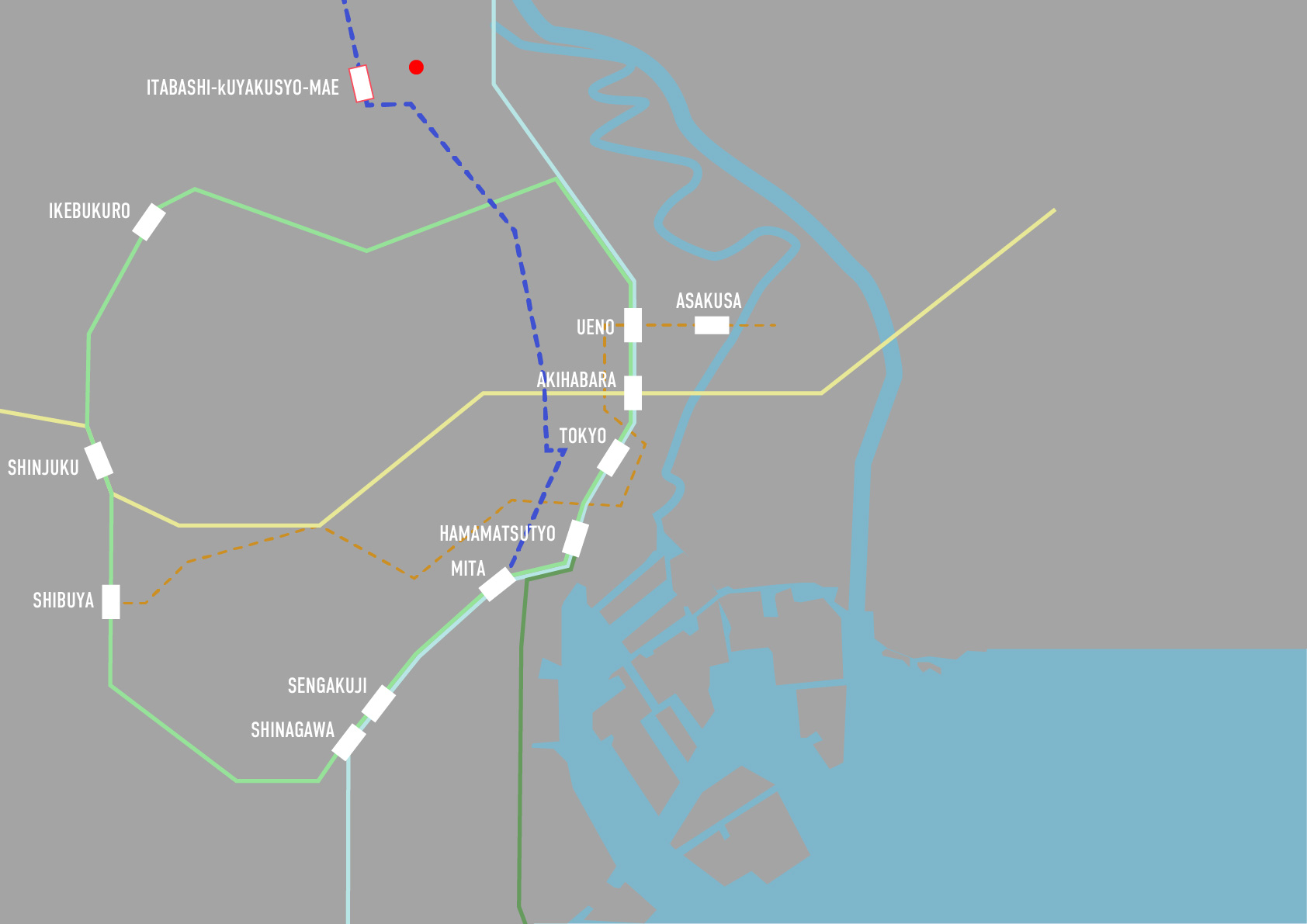
🚉 Train Route Information
From: Haneda Airport To: Near Itabashi Kuyakusho-mae
✈️ Haneda Airport Terminal 1 & 2 (羽田空港第1・第2ターミナル)
⏬ Board: Keikyu Airport Line (Airport Express) (京急空港線 エアポート急行)
🚉 Keikyu Kamata (京急蒲田) > Note: The train continues as the “Keikyu Main Line”. Stay on board if it is a direct train to Sengakuji/Mita.
⏬ Continue: Keikyu Main Line (Express) (京急本線 急行)
🚉 Sengakuji (泉岳寺) > Note: The line name changes to “Toei Asakusa Line” here. Many trains continue directly.
⏬ Continue: Toei Asakusa Line (都営浅草線)
🛑 Mita (三田) ⚠️ TRANSFER REQUIRED (乗り換え) > Switch from the Toei Asakusa Line to the Toei Mita Line (都営三田線).
⏬ Board: Toei Mita Line (Destination: For Nishi-takashimadaira / Sugamo)
【Get Off】 🚉 Itabashi Kuyakusho-mae (板橋区役所前)
🚶 Walk: 956m (Approx. 12–15 minutes)
Hours
10:00 to 16:00
Fees
Free